
BAR TIMES STORE JOURNAL
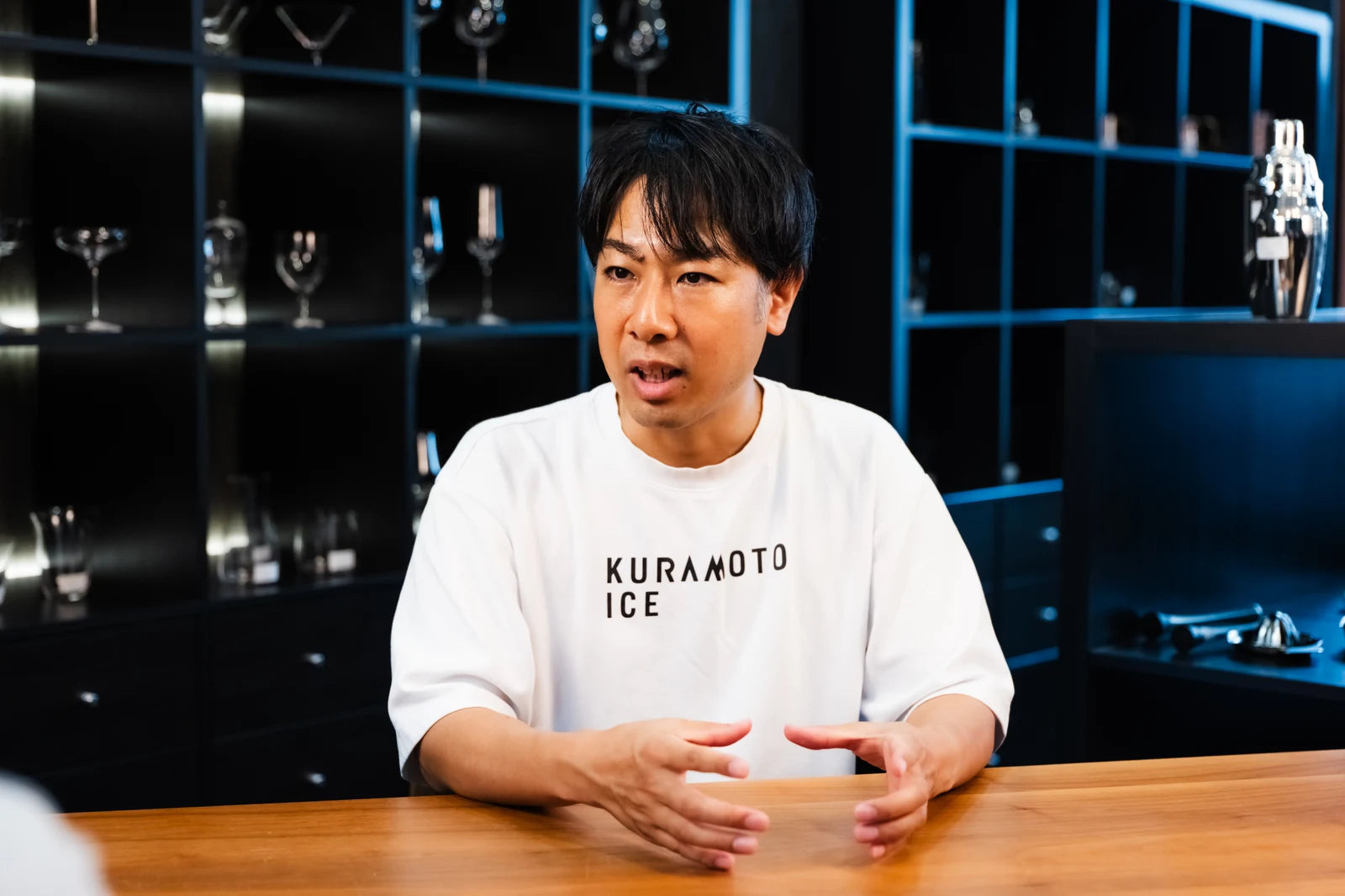
Kazuhiko Kuramoto
President and Representative Director, Kuramoto Ice Co., Ltd.
EDITOR'S INTRODUCTION
The business that became Kuramoto Ice began in Kanazawa in 1923. Today, its ice travels overseas under the name KURAMOTO ICE, reaching bars around the world. From a neighborhood ice shop to a company that makes its own ice and delivers it abroad, that transformation has been driven by its fifth-generation leader, Kazuhiko Kuramoto.
At the heart of Kuramoto’s work have always been the voices of the bartenders who use his ice. What kind of ice would help them make the drink they imagine? How could an ice supplier support their work? The decision to make ice in-house, the development of different cuts for different uses, and the expansion overseas all connect to those questions. Through the journey of a man who has broadened the possibilities of ice alongside bartenders, we explore what an ice supplier can become.
Chapter 1 — When Ice Sustained Everyday Life
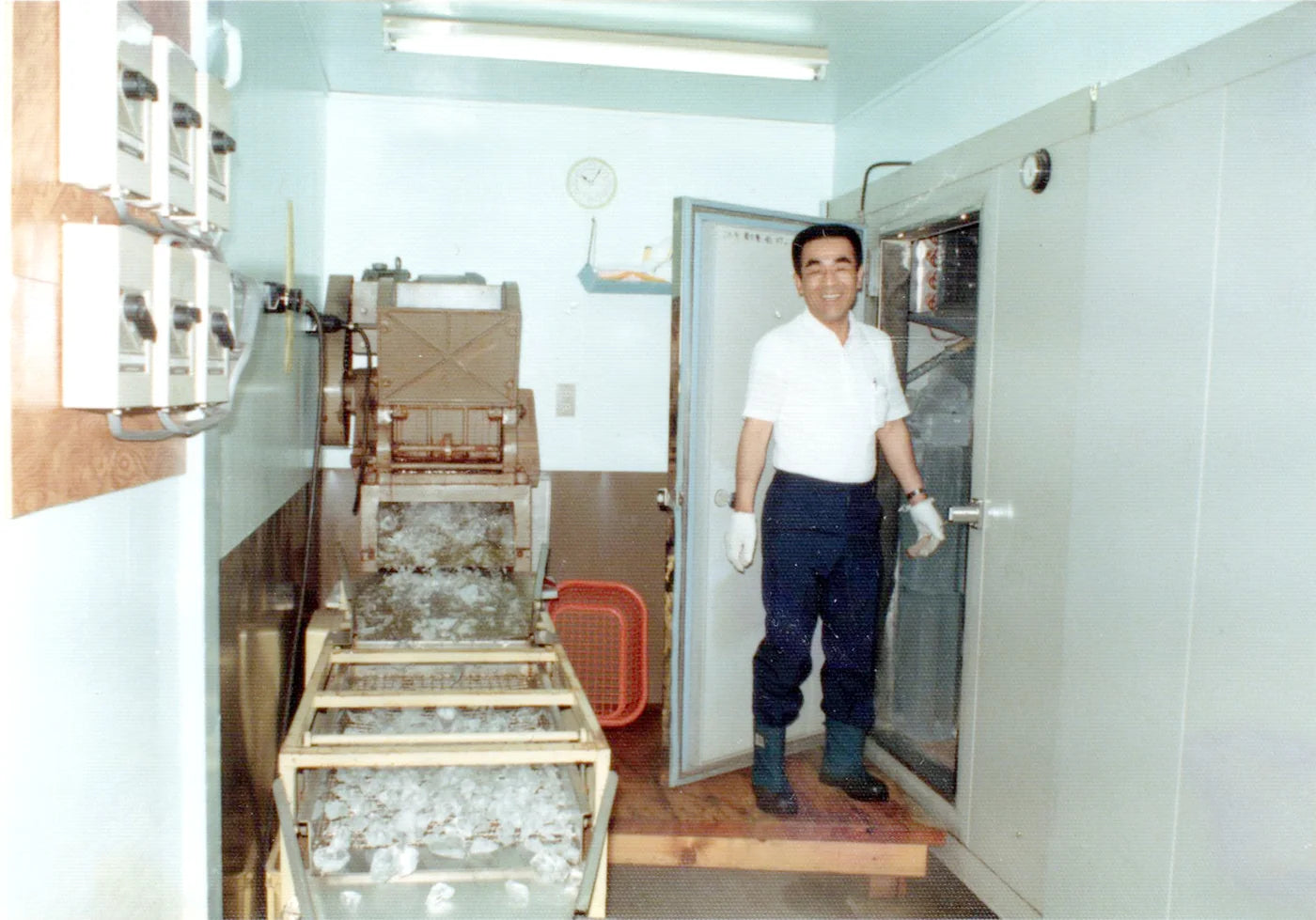
The Kuramoto family’s ice business began in 1923, before electric refrigerators were common in Japanese homes.
People used iceboxes: ice placed in the upper compartment kept food in the lower compartment cold. Ice for refrigeration was essential not only in homes, but also in hospitals and shops selling fresh fish.
The business was originally called Kuramoto Shoten. It bought ice from a local manufacturer and sold it to customers. The shop also stocked everyday household goods, drawing shoppers from the neighborhood. Large blocks were cut with a saw outside the shop and carried wherever they were needed. This was not yet the work of shaping clear ice beautifully so that it would shine inside a glass. First and foremost, ice was infrastructure that sustained daily life.
Under the third generation, the business became Kuramoto Hyoten. In the 1960s, its main customers shifted toward nightlife venues such as snack bars, clubs, and lounges. Large blocks of ice would be left outside each establishment, and some melting in the sun before opening time was simply taken for granted. The era in which quality and shape themselves would be valued was still some way off.
As a child, Kuramoto often accompanied ice deliveries to the zoo. He cannot clearly remember whether the ice was for polar bears, shaved ice, or chilling drinks. What does remain, if only faintly, is the sight of a frozen coelacanth in a freezer where they delivered ice. It is a memory from a time when ice suppliers brought cold to all kinds of places around town. Growing up in that world, he began to want to take over the family business one day. Even in his kindergarten class book, he wrote that he wanted to become an ice supplier. But by the time he graduated from university, the small family shop could not afford to take him on.
After graduation, he joined a company working with electrical equipment, taking a sales role that involved drawing plans and proposing systems. His attachment to the family business never faded. The turning point came when Kuramoto Ice faced a threat to its survival. His father asked whether he would join and help support the company. He was 25.
His days began early behind the wheel and continued with ice deliveries until evening. Only after entering the trade did he realize how heavily it depended on nightlife businesses, and how difficult it was to imagine substantial growth ahead. Local ice shops and manufacturers were gradually disappearing.
“To be honest, I thought it was an old-fashioned line of work.”
Yet he never considered walking away from it.
“I didn’t think supplying ice had to remain an old-fashioned job. I felt it had the potential to become a profession people would admire.”
The people who helped him see that possibility were bartenders who refused to compromise on ice in their pursuit of a better drink.
Chapter 2 — Betting ¥250 Million on Ice
Kuramoto Ice had held on to a goal since his grandfather’s generation: one day, rather than simply selling ice bought from others, they would make their own.
When Kuramoto joined, annual sales were approximately ¥80 million. Building their own factory would require around ¥250 million. Given the size of the existing business, it was not an easy investment to justify. People around him said it could not be done, and discussions with financial institutions continued at length.
Kuramoto explains why he refused to abandon the plan.
“If we didn’t do it, a time would come when ice could no longer be delivered. I thought investing ahead of that could change the direction things were heading.”
With the Hokuriku Shinkansen about to reach Kanazawa Station, expectations of growing demand in the city’s food and drink businesses also helped. Financing was secured, and in 2015 the company established its long-awaited ice factory in Minato, Kanazawa. It expanded from retail into manufacturing.
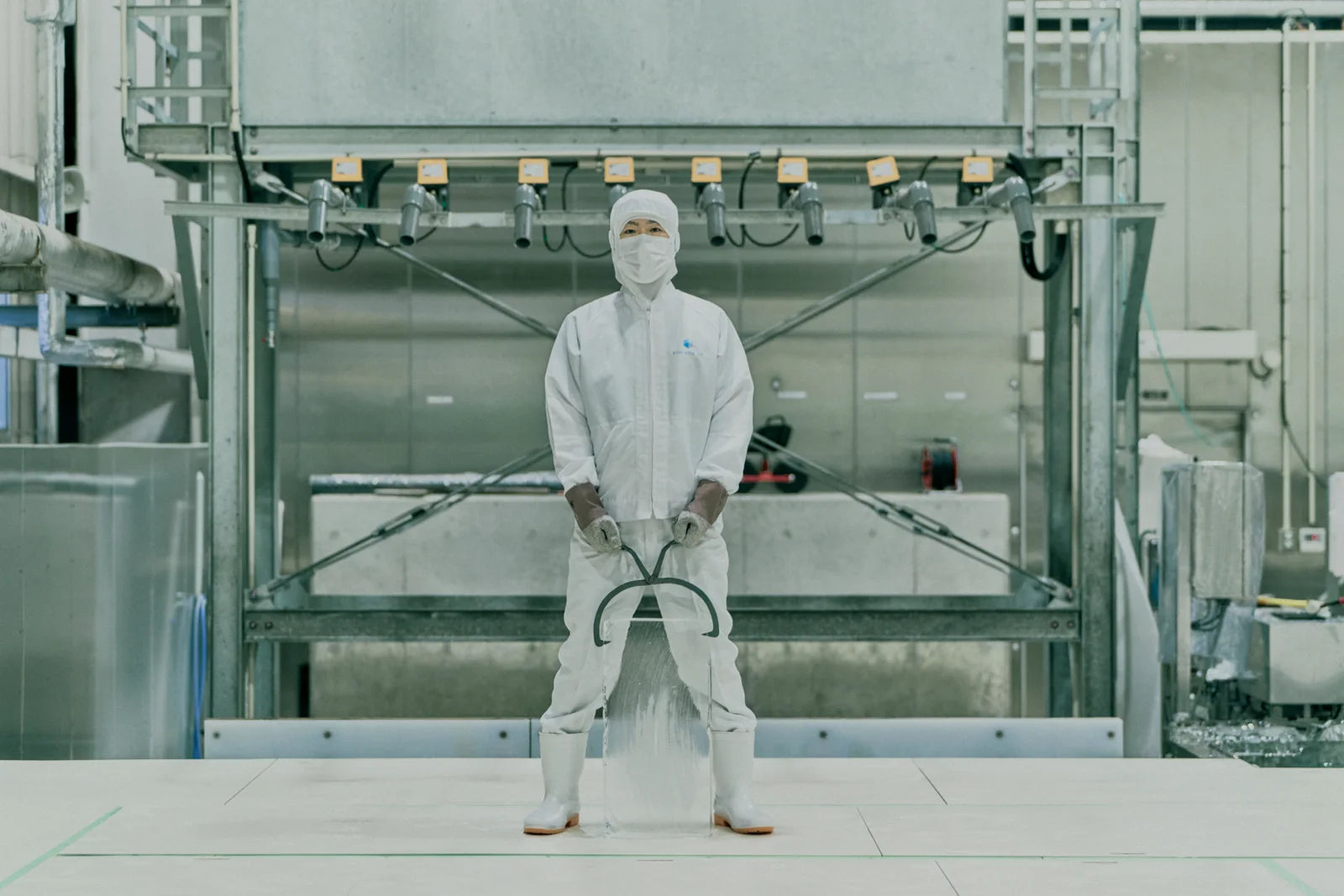
Before opening, they visited a range of ice manufacturers, observing and studying how ice was made. Understanding the process in theory did not mean they could produce the same result. Ice that should have been clear emerged cloudy and full of bubbles, nowhere near good enough to offer customers. There was no choice but to discard it. Before long, 20 tons of rejected ice had piled up around the factory. They had hit a wall almost immediately.
“I have never wanted ice to melt so quickly as I did then.”
Should they extend the freezing time by 30 minutes? At what point should they replace the water? They stayed at the factory into the night, testing, failing, and testing again. Water temperature, outside air, the quantity being frozen at once, and even small differences in an operator’s habits could change the result. This was not a process in which pressing a button produced an identical product after a fixed interval.
That experience led Kuramoto Ice to stop describing its work as “manufacturing” ice.
“Ice is something you nurture rather than manufacture. That is why we call ourselves a production team, not a manufacturing team.”
Ice keeps freezing 24 hours a day, 365 days a year. Even now, they have not worked everything out. As the weather changes, so does the temperature of the water entering the factory. Within clear blocks that look the same every day, the conditions of that particular day are recorded.
Once they began making ice themselves, they saw it differently from when they had bought it and sold it on. Previously, if ice was cracked or would not split as expected, they had complained to their supplier.
“We used to complain to the manufacturers quite a bit. But once I tried it myself, I realized how difficult their work had been.”
They could not suddenly solve every problem. But they could at least understand what was happening inside the ice: why it cracked, and why lines and cloudiness appeared.
Kuramoto and his team refer to the lines within a raw block and the direction in which it tends to split as the “grain” of the ice. It is a practical term they use to read differences within it. Ice is crystalline, and crystal orientation, boundaries between crystals, and tiny internal cracks mean that it does not break uniformly when force is applied.
Even within a single 135-kilogram block, appearance and splitting behavior vary according to where a piece is cut. Just as different cuts of meat suit different uses, different parts of a block of ice have their own applications. The team assesses those characteristics to decide whether a piece is suited to drinks on the rocks or to shaking. They share those differences with bartenders so that the ice can be chosen to suit each drink.
That was how a business accustomed to buying, cutting, and delivering ice began to make it.
Chapter 3 — Bartenders Gave Ice Its Meaning
Before it had its own factory, Kuramoto Ice was not particularly strong in the bar market. It supplied high volumes to snack bars, clubs, and lounges, but had fewer connections with bars that chose ice specifically for each drink.
The people who changed Kuramoto’s perspective were young bartenders returning to Kanazawa after gaining experience in Tokyo and elsewhere.
Around that time, one bar asked for ice cut into long, narrow sticks, with the remaining finishing work to be done at the bar. Until then, large blocks had been the standard delivery. That request made Kuramoto realize, for the first time, how much more an ice supplier could contribute to the bar industry.
“I thought, there really is something here. Supplying ice could become a profession to be proud of.”
He began asking bartenders questions. How much time did they spend preparing ice before opening? What size did they need for each glass? How much cutting should the supplier do, and what would they prefer to finish themselves?
Spheres, cubes, sticks. Even within the same shape, lengths, thicknesses, and angles differ. They translated those requests into products one by one, eventually building a range of around 55 types.
When the factory opened, Kuramoto Ice had no experienced ice makers. That was a serious weakness. But it also had a strength that established manufacturers did not necessarily share.
“We didn’t know how to make it. But I think we knew better than anyone what good ice should be.”
For years, they had delivered directly to food and drink establishments. They could look at ice backward from the moment a bartender used it and a guest tasted the drink, rather than treating it as a finished product when it left the maker.
“Our job doesn’t end with delivery. We think all the way through to the ice entering a glass and becoming part of a finished cocktail.”

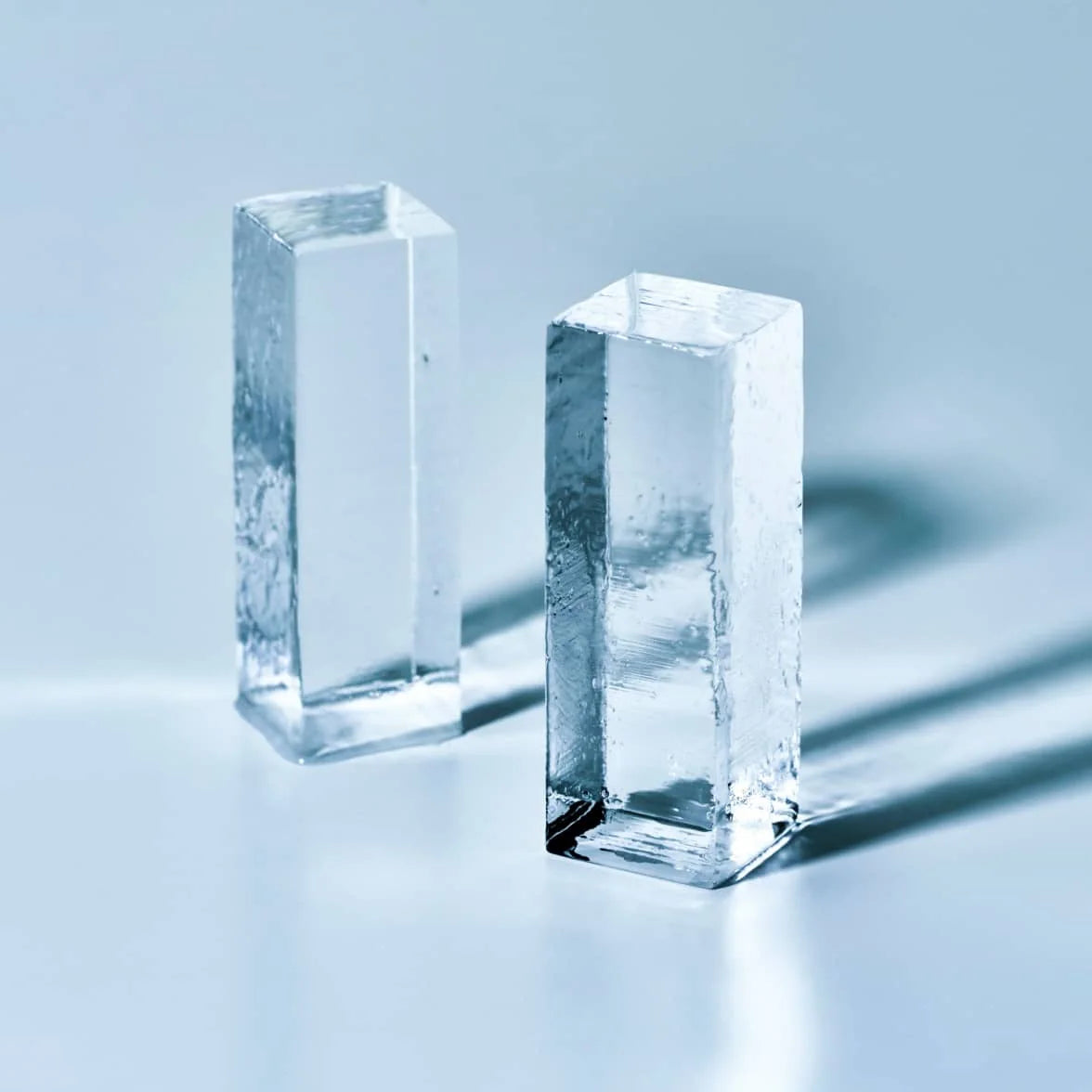
Pre-cut ice reduces preparation time. At the same time, cutting ice, handling it, and reading its condition on a particular day are skills that have helped shape Japanese bar culture.
“I want people to choose not to do it even though they can, rather than avoid it because they can’t. We must not lose our knowledge of ice or the skills involved in handling it.”
Each bar should be able to decide how much to entrust to the ice supplier. Kuramoto sees his role as preserving both efficiency and skill, rather than declaring one or the other the right answer.
That approach extends beyond translating bartenders’ requests into particular shapes of ice.
During the pandemic, bars across Japan were asked to refrain from serving alcohol or to shorten their opening hours. Kanazawa was no exception, and many struggled to remain in business. Ice orders fell sharply. Then one bar owner contacted Kuramoto: “I’ve reached my limit. I can’t keep the bar going any longer.” Kuramoto suggested serving shaved ice. It would allow the bar to operate during hours when alcohol could not be served and might bring in an entirely new audience.
The bar began serving shaved ice and, just as hoped, gained new fans. Families and young people in their twenties, customers quite different from its previous clientele, started visiting. As the pandemic subsided and normal bar service resumed, people who had discovered the place through shaved ice returned for cocktails.
At a moment of seemingly unbearable difficulty, Kuramoto’s suggestion helped save a bar. The owner thanked him as a “lifesaver.” “He puts it rather grandly,” Kuramoto says with a shy smile, but adds, “It was one of those moments that really touched me as an ice supplier.”
Thinking about how a customer could stay in business, rather than simply delivering ice: for Kuramoto, that too was part of the job.
Chapter 4 — Distant Las Vegas Felt Closer Than Tokyo
There was a city to which Kuramoto had long dreamed of delivering his ice: Las Vegas.
He had visited on his honeymoon and tried cocktails at various bars. In the drinks served at glamorous hotel bars, he had not found ice that satisfied him. He continued writing about that experience online and on social media.
One day in 2018, he heard from Naoto Yonezawa, who worked for a food trading company in Los Angeles. Looking to start an ice business in the United States, Yonezawa had been searching for Japanese ice suppliers. Kuramoto was the first person he approached.
The two had never met. Yet Yonezawa believed Kuramoto would be willing to take on a new challenge alongside him.
“It was an encounter that changed not just our business in America, but my life.”
Exports to the United States began in 2019. The pandemic forced many bars to close, but Las Vegas was still operating. Through repeated conversations with local bartenders, Yonezawa helped bring Kuramoto Ice into a hotel bar.
Then Yonezawa called.
“Our dream has come true.”
Their work had reached the place Kuramoto had imagined on his honeymoon and kept talking about ever since. When he heard the news, tears welled in his eyes.
In Las Vegas, word spread from that first hotel bar to others. Kuramoto Ice also reaches Los Angeles, New York, Boston, and other American cities. Venturing overseas changed the company’s distance from Japan as well.
From Kanazawa, it had been difficult to connect with leading bartenders in Tokyo. But when those bartenders visited Los Angeles for guest shifts, they used Kuramoto Ice there. Those encounters opened up conversations back in Japan.
“Close, yet far away. Far away, yet close,” is how Kuramoto describes the change. Going abroad had also created connections with Tokyo’s bartenders.
Today, KURAMOTO ICE is used in bars in the United States, Australia, and Singapore.
Ice melts. In another country, frozen distribution systems, city streets, and the price at which a delivery can reach a bar all differ. Making clear ice alone will not get it into a glass overseas. Understanding local distribution, transporting it without losing quality, and keeping the cost within what a bar can afford for a drink: Kuramoto considers all of that part of making ice.
Chapter 5 — Keeping Bartenders’ Ideas Moving
Delivering ice to Las Vegas fulfilled a long-held dream. But it was not the end of Kuramoto’s work.
He describes his goal this way.
“Making sure bartenders can get the ice they want, so that their thinking never has to stop. I believe that is our goal.”
When a bartender imagines a drink, a lack of the right ice should not force them to abandon it. Whether a bar wants the supplier to do everything or prefers to apply the finishing touches itself, the ice should arrive in the condition that bar needs.
Adding more shapes and sizes is not an end in itself. What matters is creating room for bartenders to keep thinking.
Kuramoto has another ambition: to make KURAMOTO ICE a name recognized around the world. Behind it is a desire to communicate, through his company’s ice, the value of the work Japanese bartenders and ice suppliers have built together. Just as some glassware and shaker brands are known across borders, he wants ice to have such a name too.
“Bartenders are the people who have helped us grow. If a Japanese ice supplier earns recognition around the world, I hope that will also become one more reason to appreciate the Japanese bartenders behind it.”
In Japan, bartenders have asked for better ice, and ice suppliers have responded. When new shapes emerge, the skills for using them develop in turn. Kuramoto believes that exchange has helped nurture Japan’s distinctive bar culture.
The 20 tons of ice once piled around the factory taught him how difficult ice making could be. Yet the place where an ice supplier’s work is truly judged is not inside the factory.
Even as ice nurtured in Kanazawa reaches the world, Kuramoto looks neither at the factory nor at a map of export destinations. He looks at the hands of the bartender standing before a glass.
Ice is not finished when it leaves the ice factory.
Only when a bartender chooses it, works it, pours a drink, and serves it to a guest does it become complete, within that glass.
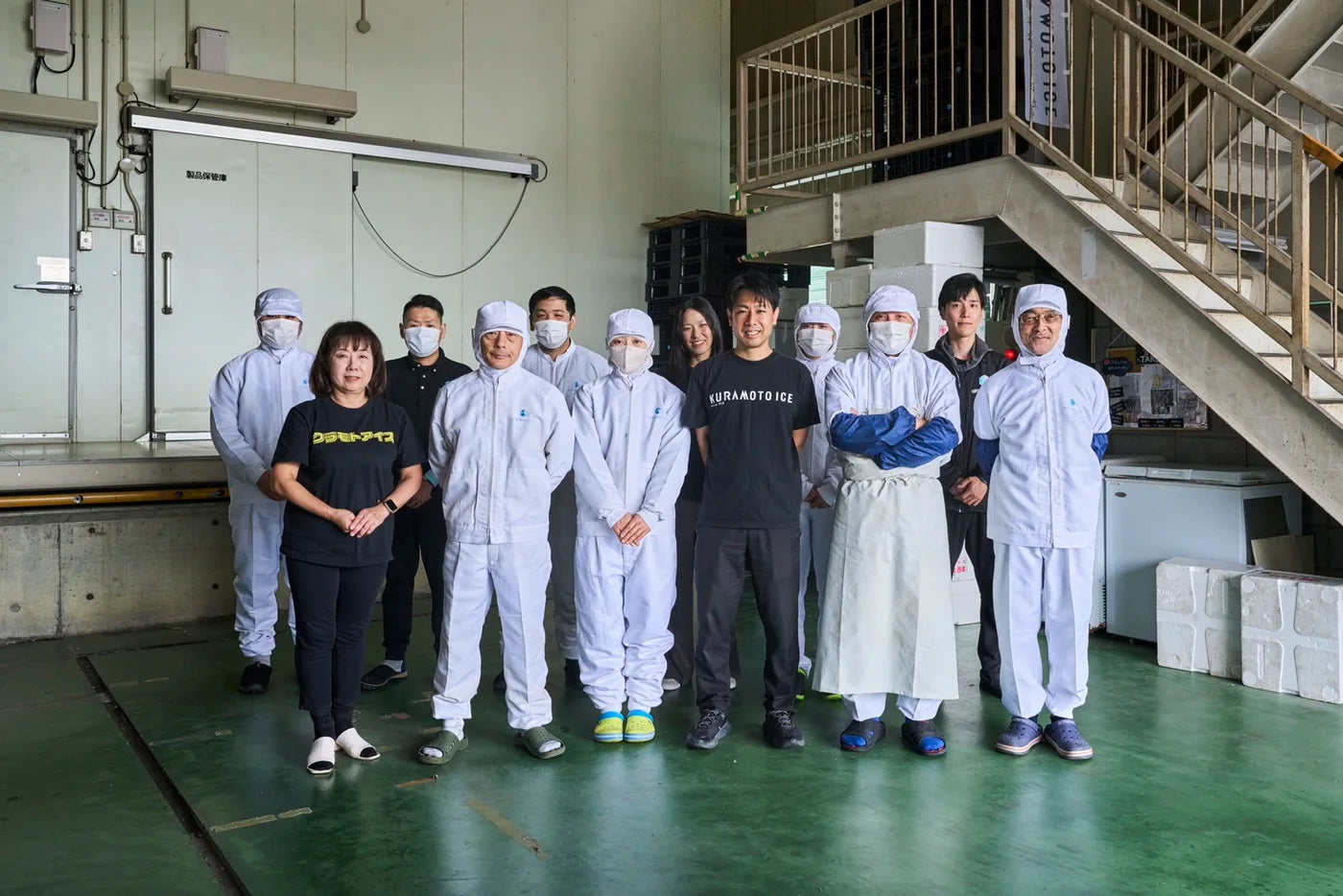
PROFILE

Kazuhiko Kuramoto
President and Representative Director of Kuramoto Ice Co., Ltd. Born in Kanazawa, Ishikawa Prefecture, in 1985. After graduating from university and working in systems sales for an electrical equipment company, he joined the family business in 2010. Alongside hands-on work in cutting, delivery, and sales, he drove the establishment of its own ice factory in 2015, the development of ice for cocktails, and the expansion overseas. Full-scale exports to the United States began in 2019, followed by Australia and Singapore. In April 2024, he became the company’s fifth-generation President and Representative Director. Under the message “It is time to choose your ice, too,” he aims to make KURAMOTO ICE a leading global brand.